IN THIS POST
KEY TAKEAWAYS
- Rashes can be caused by parasites, allergies, infections, skin conditions, or underlying systemic issues.
- Redness, itching, and bumps are typical, but the specific location of the rash is a major diagnostic clue.
- Heat rash, fleas, and contact allergies are the most common reasons a dog starts scratching, especially in warmer months.
- Rashes that spread to the groin and armpits often point toward contact or environmental allergies.
- When to Seek Help: While mild cases are manageable at home, you must call a vet for pus, foul odors, rapid spreading, or behavioral changes.
Common Symptoms
The skin on your dog’s belly is thin and sensitive, making it a primary site for irritation. Since many rashes look similar at first, it helps to watch for a few key details:
Visual Appearance
- Skin Changes: Look for flat red patches, raised bumps, pustules (small bumps filled with pus), scabs, or flaky skin.
- Distribution: Check whether the rash stays in one spot or starts creeping toward the groin, armpits, or skin folds.
- Texture & Odor: Note if the skin feels warm, moist, or has a foul smell (a sign of infection).
Behavioral Signs
- Self-trauma from scratching or licking: Intense scratching, licking, or biting at the site.
- Relief Seeking: Rubbing the belly against carpets or grass to soothe the itch.
- Systemic Changes: Restlessness, disrupted sleep, or a sudden loss of appetite.
- Secondary Damage: Watch for broken skin or “hot spots” caused by excessive scratching within 24 to 48 hours.
Common Causes
A belly rash rarely has one universal answer. Your dog’s immune system reacts differently depending on the trigger, so identifying the specific cause is the only way to determine the correct treatment. Your vet may need to perform a skin scraping or microscopic analysis to be certain.
Parasites
Fleas
Flea saliva is a potent allergen that triggers a response known as flea allergy dermatitis. In sensitive dogs, a single bite is enough to cause intense, widespread inflammation. While the belly, groin, and tail base are primary targets, you may not actually see a flea.
Fleas move fast and dogs often groom them away, but owners can confirm their presence with a “flea dirt” test. Drag a fine comb through the coat over a white paper towel, then dampen the towel. If the debris turns red, that confirms the presence of flea waste, which is digested blood.
Ticks
A tick bite often leaves a small raised bump where the tick was attached. While the physical bite causes irritation, the more serious concern is the systemic illness caused by bloodborne pathogens the tick may transmit. If you notice behavioral changes or a lingering rash after a tick bite, it warrants an immediate vet call.
Mange
Mange is caused by microscopic mites that burrow into the skin to live and reproduce. This burrowing action creates intense physical irritation, which triggers an inflammatory response. The dog scratches aggressively to stop the crawling sensation, but the scratching further damages the skin barrier and leads to secondary infections.
Some forms, like sarcoptic mange, are highly contagious to other animals and even humans. Because the treatment depends entirely on which mite species is present, a professional diagnosis and a deep cleaning of all bedding and soft surfaces are required to stop the cycle.
Lice
While less common than fleas, lice cause visible coat changes and skin irritation. Adult lice are sometimes visible to the naked eye, but a vet must use a microscope to confirm the diagnosis. Treatment is a multi-week process that involves treating the dog directly and thoroughly cleaning all soft surfaces the dog frequents to eliminate nits (eggs) from the environment.
Allergies
Contact and Environmental Allergies
Contact allergies happen when your dog’s skin overreacts to something harmless, like grass or cleaning products, releasing histamines that make the skin red, itchy, and irritated. Because the belly and groin have the most direct contact with grass, flooring, and household surfaces, these areas are particularly vulnerable to pollens, dust, and cleaning products. To help your vet form the diagnosis, keep a detailed log of your dog’s environment and activities before a flare-up occurs.
Food Allergies
A food allergy frequently manifests as skin irritation. You may notice red blotches or spots on the belly, face, or paws, often accompanied by digestive symptoms like diarrhea or a tender abdomen. Protein sources such as beef, chicken, and lamb are the most frequent culprits, while grain allergies are statistically less common.
How vets confirm a food allergy:
According to the Canadian Academy of Veterinary Dermatology, there is no reliable blood, saliva, or hair test for diagnosing food allergies in dogs. The standard diagnostic method is a strict 8-week elimination diet using either a novel protein or a hydrolyzed formula.
This means feeding a protein the dog has never eaten before, like duck, rabbit, or venison, so the immune system has nothing familiar to react to.
A hydrolyzed diet works differently: the protein is broken down into pieces so small the immune system no longer recognizes it as a threat.
Either way, zero extras during those eight weeks. No treats, no flavored medications, no table scraps. Even one bite of the wrong thing can reset the clock.
Insect Bites and Hives
Beyond fleas and ticks, other insect bites can trigger a rapid allergic skin reaction. Hives can be a sign of these reactions, though they are often missed because they can appear and disappear within hours. If you notice sudden, raised welts on the belly, they are most likely tied to an insect sting or an acute food reaction.

Infections
Bacterial Infections (Pyoderma)
According to PetMD, pyoderma is one of the most common skin diseases vets see. It usually starts when scratching breaks the skin open and lets bacteria, most commonly Staphylococcus, move in. Symptoms range from general redness to small lesions and pustules.

Treating pyoderma typically involves a course of antibiotics, either topical or oral. Your veterinarian will determine the appropriate medication based on your dog’s breed and weight, but completing the full course is critical to avoid antibiotic-resistant infection.
Yeast Infections
Yeast normally lives on a dog’s skin, but it can grow out of control when conditions are right. Humidity, underlying health issues, or moisture trapped in skin folds can all set it off. You will likely notice a distinctive, musty smell often described as corn chips alongside redness and intense itching. Because yeast thrives in damp environments, antifungal medications are the standard treatment. Your veterinarian will determine the appropriate protocol and dose based on your dog’s specific condition.
Fungal Infections and Ringworm
Beyond yeast, several types of fungi can infect a dog’s skin, although ringworm, which is actually a fungus and not a worm, is the one most owners recognize. It produces a distinctive circular rash with a red center and hair loss around the edges. Ringworm is highly contagious to other pets and humans, and direct contact with an infected dog or contaminated surfaces can spread it. Treatment combines topical therapies, such as medicated shampoos, with oral antifungals to fully eradicate the fungus.
Skin Conditions
Heat Rash
Heat rash, also called miliaria, develops when heat and moisture become trapped against the skin, causing irritation and inflammation. Dogs regulate temperature primarily through panting, but moisture can still accumulate in areas where airflow is poor. This is more common in summer, especially in dogs with heavy coats or deep skin folds like Bulldogs and Pugs. The belly, groin, armpits, and neck are common sites.
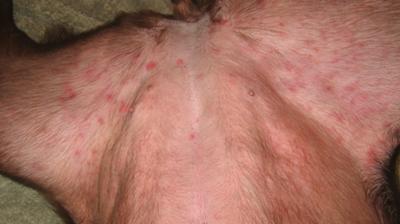
How it progresses
Heat rash typically moves through a progression that’s visible. It often starts as bright red or pink skin that feels warm to the touch. As irritation deepens, small clear or red bumps appear, creating the intense prickly sensation that makes dogs restless and prone to obsessive licking.
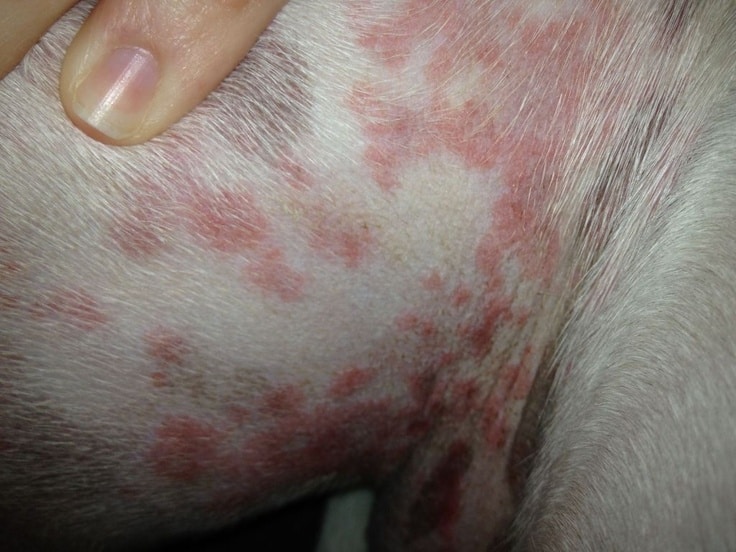
In more advanced cases the bumps may become pustular as the body reacts to the trapped moisture.
The Risk of Secondary Infection
The main concern is not the rash itself but what happens next. Dogs instinctively lick irritated skin, but the added moisture creates ideal conditions for bacteria to grow. If the area starts to smell bad, ooze, or become very red and painful, a secondary bacterial infection may be present, and a veterinarian should examine the dog.
Treatment and Prevention
Mild cases may improve once the dog is kept in a cool dry environment. See the Home Remedies section for options suitable for mild cases on intact skin only. Keeping skin folds dry and limiting intense activity during peak humidity are the most effective ways to prevent a recurrence.
Hot Spots
A hot spot starts with an itch, usually from an allergen, bite, or other irritant. The dog scratches, breaks the skin, and releases serum. That serum promotes bacterial growth, which makes the spot itchier, which leads to more scratching. This cycle escalates quickly, allowing hot spots to spread across the skin within hours.
Treatment typically starts with clipping the fur away from the area to expose the full rash, gentle disinfection, and a topical antibacterial and anti-itch cream. Your veterinarian will determine the appropriate medication and dose based on your dog’s breed, weight, and specific condition.
Seborrhea
Seborrhea causes the skin to dry out, develop scales, and flake. The resulting skin disruption is itchy and uncomfortable. In some breeds it is a genetic condition manageable with moisturizing shampoos and conditioners. In other cases it signals an underlying hormonal or systemic issue. A vet visit is needed to distinguish between the two and to rule out concurrent bacterial or fungal infection.
Acral Lick Granuloma
An acral lick granuloma happens when a dog obsessively licks a single spot until the skin is raw and thickened. While it often starts as a small itch or minor injury, the constant licking creates a lesion that can grow larger and become deeply infected. The behavior is often a mix of physical pain and psychological factors like boredom or anxiety.
Treatment typically starts with antibiotics for infection, followed by anti-inflammatory medication. Your veterinarian will determine the appropriate medication and dose based on your dog’s breed, weight, and specific condition.
Systemic and Other Causes
Hormonal Conditions
Diabetes, hypothyroidism, and Cushing’s disease often trigger skin changes. A belly rash is sometimes the first visible sign of an internal hormonal imbalance. While the owner’s observations help identify patterns, blood tests are the only way to confirm whether a hormone issue is behind the rash. Keeping a diary of your dog’s behavior and symptoms helps your vet connect the dots quickly. Once you have a diagnosis, most hormonal conditions are manageable with long-term medication.
Skin Tumors
Skin rashes can be early signs of developing tumors, appearing as irritated or inflamed skin before a distinct mass forms. According to the Morris Animal Foundation, mast cell tumors are among the most common skin tumors in dogs. They are notoriously itchy because mast cells store and release histamine directly into the tissue. While not all skin tumors are malignant, any new or changing growth warrants prompt veterinary attention. Early removal is associated with better outcomes and lower complication rates.
Systemic Inflammatory Conditions
Some internal health problems, such as liver disease, kidney cysts, and hypopituitarism can show up on the skin before anything else seems wrong. A rash is sometimes the first outward sign of these internal issues. According to the Merck Veterinary Manual, once the main health issue is treated, the skin usually settles down with basic soothing care.
Genetic Predisposition
Certain breeds are predisposed to skin conditions that can cause belly rashes. German Shepherds, for example, are noted in the Merck Veterinary Manual as being susceptible to specific skin conditions. If your dog is purebred and has recurring unexplained rashes, genetics may be a factor worth discussing with your vet.
How Vets Diagnose
Skin rashes rarely come with a simple, obvious answer. The same rash can have five different causes, and the only way to know for certain is to test. Most vets start with simple tests and move to more detailed ones only if needed.
Physical Examination
Every diagnosis begins with a direct examination of the rash to note its appearance, location, and distribution. The vet looks for secondary signs like hair loss, scaling, or active infection. They will also run through routine health checks and ask about recent changes in the dog’s environment, diet, grooming products, and activities. This examination alone can point clearly toward a cause, or it can tell the vet which tests to run next.
Skin Tests
Tape sample: A small piece of tape is pressed against the skin and then looked at under a microscope. This is a quick and painless way to catch hidden invaders like yeast or bacteria that are too small to see with the naked eye. It helps your vet identify the specific surface irritants triggering the itch.
Skin scraping: The vet gently scrapes a small amount of skin cells from the affected area to check for mites burrowed beneath the surface. This is the most reliable way to identify mange before it spreads.
Hair examination: Studying hairs under the microscope reveals structural damage or the presence of parasite eggs. This helps narrow down whether the issue is a surface irritant or a deeper systemic problem.
Advanced Diagnostics
Culture: If an infection is stubborn, a sample is sent to a lab to grow the specific bacteria or fungus. This tells the vet exactly which medication will be most effective, rather than guessing with a general antibiotic.
Biopsy: A biopsy is only used when other tests don’t give clear answers. The dog is sedated, a small section of affected skin is removed surgically, and the sample is sent for laboratory analysis. This can reveal deep-tissue causes or cellular changes that other tests cannot detect.
Blood Work
Blood panels can detect systemic causes of skin rashes that would otherwise be invisible on the surface. Infections, hormonal imbalances, organ dysfunction, and immune conditions can all show up in bloodwork before they produce other obvious symptoms. Many veterinary clinics can run basic panels in-house, with more complex testing sent to an external laboratory.
Treatment Options
There is no single treatment for a dog belly rash. The right approach depends entirely on the cause. What clears a heat rash will do nothing for a fungal infection, and treating a bacterial infection without addressing the underlying allergy is a short-term fix at best. A vet visit is the most reliable way to match the treatment to the actual problem.
Medications
Antihistamines: For rashes driven by allergic reactions, antihistamines can reduce histamine-related inflammation and relieve itching. Over the counter options like Benadryl, Zyrtec, and Claritin are sometimes used, but appropriate use in dogs differs from humans. Your veterinarian will determine the appropriate medication and dose based on your dog’s breed, weight, and specific condition.
Antibiotics: Bacterial skin infections, pyoderma, require antibiotics to resolve. These may be topical, oral, or both depending on the severity. It’s important to finish the full course, even if your dog looks better early. Stopping early risks developing an antibiotic-resistant infection that is significantly harder to treat.
Antifungals: Yeast and fungal infections are treated with antifungal medications, oral or topical depending on the severity and location. Your veterinarian will determine the appropriate medication and dose based on your dog’s breed, weight, and specific condition.
Prescription allergy medications: For dogs with chronic or severe allergic skin disease, a veterinary dermatologist may recommend longer-term prescription options beyond standard antihistamines. These medications can help dogs who don’t respond well to basic allergy treatments.
Topical Treatments and Creams
Hydrocortisone cream: A corticosteroid cream that reduces inflammation, itching, and redness. It is available over the counter and is commonly used for mild rashes including heat rash. According to VCA Hospitals, it should not be applied for more than three days without veterinary guidance, as prolonged use of steroid-based products can have adverse effects on the skin.
Topical antibacterial cream: Used when a rash is infected or at risk of becoming infected. Applied directly to the affected area to control bacterial growth and support healing.
Aloe vera gel: A soothing option for mild irritation and heat rash. Pure aloe vera applied directly to intact skin can reduce inflammation and relieve itching. Ensure the product is dog-safe and free of additives.
Calamine lotion: Has cooling and anti-itch properties useful for mild surface irritation. See the safety note in the home remedies section before applying.
Medicated Shampoos
Medicated shampoos deliver active ingredients directly to the source of the irritation while clearing away debris.
Shampoos containing chlorhexidine and miconazole are commonly used for fungal conditions. For heat rash, a soothing shampoo clears the pustules and removes the surface heat and moisture that keep the inflammation active.
Using the wrong product can backfire; because dog skin has a different pH than human skin, using human or baby shampoos can disrupt the skin’s natural protection and make a rash worse.
Format note for owners: Topical treatments come in creams, sprays, and shampoos. Sprays can be easier to apply on dogs who resist handling of the affected area. Your vet can advise on which format is most practical for your dog’s specific location and temperament.
Home Remedies
Home remedies are best used for mild rashes on intact skin to relieve discomfort while the underlying cause is being identified. They are not a substitute for veterinary care when infection is present.
⚠️ Important Safety Note
Do not apply any topical home remedy to broken, bleeding, or oozing skin. Calamine lotion and apple cider vinegar in particular can cause significant stinging and may be toxic if absorbed through compromised skin. When in doubt, leave it alone and call the vet.
Oatmeal Baths
Ground colloidal oatmeal added to a lukewarm bath is one of the gentlest and most effective options for relieving generalized skin irritation and itching. Let the dog soak for several minutes. Colloidal oatmeal shampoo is a practical alternative for dogs who resist baths.
Baking Soda
Baking soda may help soothe itchy, irritated skin and provide temporary relief from inflammation. Use it cautiously and not as a routine treatment, as it can disrupt the skin’s natural pH with repeated use.
Always rinse thoroughly and prevent the dog from licking the treated area, as ingesting baking soda in significant quantities can cause electrolyte imbalances and digestive upset.
For spot treatment, mix equal parts baking soda and water into a paste, apply directly to the affected area, leave for 20 minutes, then rinse thoroughly. For widespread irritation, add baking soda to bath water instead.
Aloe Vera
Fresh aloe vera gel applied directly to intact skin soothes irritation, reduces inflammation, and provides temporary itch relief. Use pure gel squeezed from a leaf or a dog-safe product without added fragrances or alcohols. Aloe vera is particularly useful for heat rash and mild contact reactions.
Herbal Tea Soaks
Chamomile, green tea, and calendula have natural anti-inflammatory and mild antibiotic properties. Brew the tea, allow it to cool completely, then either spray it onto the affected area or use it as a soak. These are best suited for mild surface irritation rather than infected or oozing rashes.
Witch Hazel
Witch hazel has astringent and anti-inflammatory properties that can help relieve surface irritation and calm hot, inflamed skin. Holistic veterinarians including Greg Tilford and Dr. Judy Morgan, both cited by PetMD, recommend it for flea bites, dermatitis, and minor skin inflammation. Always use alcohol-free formulations, as alcohol-based products can dry and further irritate the skin. Dab onto intact skin only using a cotton ball or gauze.
Epsom Salt
Epsom salt soaks may help reduce swelling, relieve itching, and support the healing of surface rashes. Holistic veterinarian Dr. Deneen Fasano DVM recommends magnesium sulfate soaks for itchy skin, minor wounds, and interdigital dermatitis. It can be used as a soak for affected paws or limbs, or applied as a warm compress to belly rashes. Ensure the dog does not drink the solution.
Apple Cider Vinegar
Diluted apple cider vinegar has long been used by holistic practitioners for mild yeast-prone skin in moist areas like the groin and armpits. The Whole Dog Journal and integrative veterinarians support its diluted topical use for early, mild cases, though conventional veterinary evidence remains limited and some vets advise against it due to potential skin irritation. If using it, always dilute to a 50/50 ratio with water, apply only to intact skin with a washcloth, and discontinue if any redness or irritation develops. It is not a substitute for veterinary treatment when a yeast infection is confirmed.
Cold Packs
For heat rash specifically, a cold compress or ice pack wrapped in a washcloth can reduce inflammation and relieve the prickly discomfort quickly. Apply to the affected area for around 10 minutes at a time. This can be repeated every four to six hours during the acute phase. Do not apply ice directly to the skin.
Calamine Lotion
Calamine lotion has cooling and anti-itch properties that can provide short-term relief for surface rashes. Apply only to intact, unbroken skin. Given the toxicity risk on broken skin flagged above, inspect the rash carefully before use and err on the side of caution if there is any doubt about the skin’s integrity.
When to Call the Vet
Most mild belly rashes can be monitored at home for 24 to 48 hours. But some signs mean the situation has moved beyond home care territory. When in doubt, a call to the vet costs nothing and can prevent a minor rash from becoming a serious infection.
| Monitor at Home | Call the Vet |
|---|---|
| Mild redness, no broken skin | Pus, oozing, or open sores |
| Light scratching, dog otherwise normal | Foul odor from the skin |
| Small rash, not spreading | Rash spreading rapidly |
| No behavioral changes | Lethargy or unusual tiredness |
| Rash appeared after grass exposure | Loss of appetite |
| Mild heat rash in warm weather | Swelling, hot to the touch |
| Single small bump, no discharge | Rash after a vaccine or new medication |
| Behavioral changes after a tick bite | |
| Hives occurring more than once | |
| Dog is excessively licking or self-injuring |
A rash that appears immediately after a vaccine or a new medication warrants a same-day call rather than a wait-and-see approach, as this can signal a serious adverse reaction. The same applies to any behavioral change following a tick bite, which may indicate transmission of a bloodborne pathogen.
Skin tumors can begin as what looks like a simple rash or bump. Any growth that changes in size, shape, or color over days or weeks should be examined promptly. Early detection makes a meaningful difference in outcomes.
If a dog has a history of recurring rashes that keep coming back in the same location or pattern, it’s a sign something deeper is going on. It is worth a dedicated vet conversation rather than repeated home management. For some dogs, a broader workup that combines conventional diagnostics with individualized supportive care may be the most useful path forward.
Prevention
There is no single prevention plan that works for every dog. The right approach depends on what is causing the rash in the first place. That said, several habits go a long way toward keeping belly rashes from becoming a recurring problem.
Regular bathing: Baths remove contact allergens, environmental irritants, and debris from the skin before they trigger a reaction. They also give an opportunity to inspect the belly, groin, and armpits closely for early signs of irritation. A dog-safe leave-in conditioner after bathing can support skin barrier health.
Flea and tick prevention: Regular use of vet-approved flea and tick prevention is one of the most effective things an owner can do. Products vary in format, topical, oral, and collar-based, and in what stages of the flea life cycle they target. Your veterinarian will determine the appropriate product and schedule based on your dog’s breed, weight, and environment.
Bedding and environment hygiene: Washing the dog’s bedding weekly in hot water removes flea eggs, allergens, and bacteria before they reinfect the skin. Vacuuming rugs and soft surfaces every few days significantly reduces environmental flea load.
Diet and skin support: Healthy fats like omega-3s and fish oil act as a natural defense for the skin. They strengthen the skin barrier, making it harder for allergens to penetrate and trigger an inflammatory response. Vitamin E supports tissue repair. Your veterinarian can advise on appropriate supplementation for your dog’s specific needs.
Grooming habits: A flea comb used during regular grooming catches early infestations before they escalate. It also gives a chance to check for early rash formation, unusual scaling, or hair loss. Catching things early almost always means simpler treatment.
Heat management: In warm weather, ensure the dog has access to cool, shaded areas and is not overexerting in peak heat. Dogs with heavy coats, skin folds, or wrinkles need extra attention during summer months as these features trap heat and moisture, creating ideal conditions for heat rash. Indoor environments should be kept at a temperature the dog is comfortable in.
Keeping a symptom diary: For dogs with recurring or unexplained rashes, logging activities, diet changes, environmental exposures, and symptom timing before a vet visit is genuinely useful diagnostic information. Patterns that seem unrelated often become clear when written down.
Some owners also explore integrative options alongside conventional prevention, including diet review, skin-barrier supplements, and individualized supportive care. These are worth discussing with a vet who is comfortable with both conventional and integrative care.
Note from the Editors: This guide was originally authored by Dr. Winnie, DVM. It was updated to reflect current veterinary safety standards. To ensure the highest clinical standards, this post is currently in our queue for a veterinary re-review.
References
- American Kennel Club (AKC): Ringworm in Dogs
- DogTime: Mange in Dogs
- Merck Veterinary Manual: Mange in Dogs and Cats
- Merck Veterinary Manual: Hives and Rashes (Urticaria) in Dogs
- Merck Veterinary Manual: Fungal Infections in Dogs
- Merck Veterinary Manual: Flea Allergy Dermatitis in Dogs and Cats
- Merck Veterinary Manual: Whole-body Disorders that Affect the Skin in Dogs
- Morris Animal Foundation: Mast Cell Tumors in Dogs
- PetMD: Pyoderma in Dogs
- PetMD: Hypopituitarism in Dogs
- PetMD: Witch Hazel for Dogs: Is It Safe?
- VCA Hospitals: Flea Allergy Dermatitis in Dogs
- VCA Hospitals: Acral Lick Granuloma
- VCA Hospitals: Hydrocortisone Topical for Dogs
- Vet West Animal Hospitals: Dog Hot Spots
- Merck Veterinary Manual: Cushing Disease (Hyperadrenocorticism)
- Whole Dog Journal: Apple Cider Vinegar for Dogs
- PawromaTherapy (Dr. Deneen Fasano, DVM): Epsom Salt for Dogs and Cats
- Canadian Academy of Veterinary Dermatology: Food Allergies and Elimination Diets in Dogs
- Whitney Veterinary Hospital: Why Do Dogs Smell Like Fritos?
Related posts:
 Flea Bites on Dogs Symptoms, Pictures, Treatment and Home Remedies
 Scabs on Dogs: Causes by Location, Color, and Care Guide
 Black Spots on Dog Skin: Causes, Itching & Hair Loss
 Dog Belly Button, Pictures, Hernia, Outie, Puppy Licking Belly Button
 Red Spots on Dogs Belly Causes and Treatments
 Worms in Dog Poop, Symptoms, Treatment, Human Transmission
