IN THIS POST
Key Takeaways
- Most bee stings are painful but manageable at home. A small number are genuine emergencies that require immediate veterinary care.
- Vomiting shortly after a sting, especially alongside lethargy, swelling, or collapse, can be an early sign of anaphylaxis, a severe, potentially fatal allergic reaction that requires immediate veterinary care. Go to a vet without delay.
- Any sting inside the mouth, tongue, or throat is always an emergency, regardless of how the dog seems at first.
- Epinephrine is the only first-line treatment for anaphylaxis. Diphenhydramine does not replace emergency veterinary care.
Most dogs get stung because they investigated something they shouldn’t have, and what happens next depends on three things: where they got stung, how many times, and whether they have an allergy.
The majority of stings hurt, swell, and resolve at home within 48 hours. But some don’t, and the difference between a manageable sting and a life-threatening one can move fast.

Why Bee Venom Is Dangerous
Bee venom is not a single compound. It’s a cocktail of proteins and enzymes designed to spread quickly, break down tissue, and trigger an immune response. In most dogs, that’s painful but manageable. In sensitive dogs, the immune system treats the whole thing as a catastrophic threat and overreacts in ways that can become life-threatening within minutes.
The stinger continues to release venom for a short time after the bee dies. The faster it’s removed, the less venom the dog absorbs. Speed matters here.
Common Sting Locations & Risks
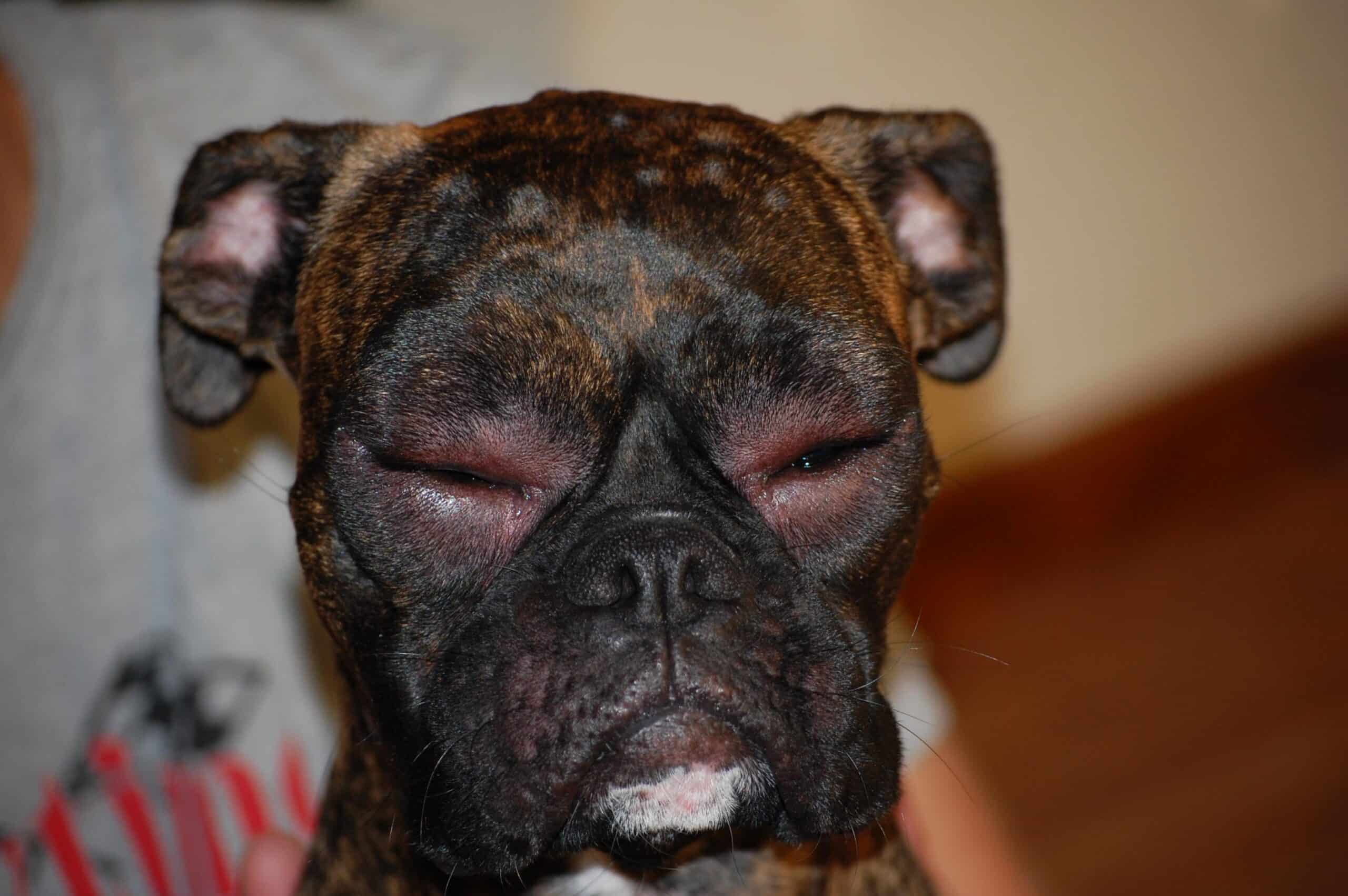
Dogs investigate the world with their noses and paws, which puts their faces, muzzles, and paws directly in harm’s way. The loose skin around the face swells dramatically with a sting, and eyes can swell completely shut.
1. Paws and Paw Pads
- Most common location
- Happens when dogs step on bees hidden in grass
- Painful but typically not life-threatening unless the dog has an allergy
- Can cause immediate limping and reluctance to walk
2. Face, Nose, and Muzzle
- Occurs when dogs try to sniff or catch bees
- Can cause significant, sometimes alarming facial swelling
- Eyes may swell partially or completely shut
- Rubbing face on the ground or furniture is a common sign
- Proximity to airways makes it more concerning
3. Mouth, Tongue, and Throat
Always an Emergency
A sting inside the mouth, tongue, or throat requires immediate veterinary care, even if the dog seems calm right now. Swelling in a confined airway can go from mild to severe enough to cause a complete blockage within minutes.
The soft tissue inside the mouth swells faster than anywhere else on the body, and airway compromise can happen quickly. Getting to a vet is the only priority.
4. Ears and Lips
- Moderate concern
- Causes visible swelling and significant pain
- Monitor for swelling spreading toward the throat
Normal vs. Allergic Reactions
Immediate Signs (Within Minutes)
Behavioral Signs:
- Running in circles or acting frantic
- Crying out, yelping, or whimpering
- Trying to lick or scratch the affected area
- Excessive drooling
- Pawing at face if stung on the face
Physical Signs at the Sting Site:
- Visible stinger (small black dot with a tiny sac attached)
- Redness around the puncture point
- Swelling that develops rapidly
- Pain when the area is touched
- Itchiness causing scratching or rubbing
Normal Reaction (Non-Allergic)
Most bee stings cause a localized reaction that includes:
- Swelling limited to the sting site
- Pain that eases within a couple of hours
- Mild to moderate swelling lasting 12 to 24 hours
- The dog remains alert and active with normal breathing and gum color
These cases can usually be treated at home with proper first aid.
EMERGENCY: Signs of Anaphylaxis
Go to the Emergency Vet Immediately If Any of These Are Present
- Difficulty breathing, wheezing, or gasping
- Swelling of the face, throat, or neck
- Swelling spreading well beyond the sting site
- Collapse or inability to stand
- Pale or blue gums
- Vomiting shortly after the sting, especially with other symptoms
- Severe diarrhea
- Rapid or pounding heart rate
- Weakness, disorientation, or glazed eyes
- Seizures or loss of consciousness
- Any sting inside the mouth, tongue, or throat
Will a Bee Sting Kill a Dog?
It can. The majority of stings are not fatal, but for a dog in anaphylactic shock, the danger is real and it moves fast. During anaphylaxis, the immune system floods the body with histamine. Blood vessels dilate, blood pressure drops, the heart races to compensate, and the airway swells. Some dogs have rapid, severe reactions even with prompt care.
The goal is to recognize emergency signs early and act immediately, not wait to see if things get worse.
Will a Bee Sting Make a Dog Vomit?
Yes, and when it happens alongside other symptoms, it’s a serious warning sign. Vomiting shortly after a sting, especially when accompanied by lethargy, swelling beyond the sting site, or weakness, can be an early indicator of anaphylaxis. It’s not always stress or an upset stomach.
If a dog vomits after a sting and shows any other concerning signs, treat it as an emergency.

Severe swelling of the face requires immediate veterinary attention as it can quickly obstruct the airway.
Dog Bee Sting First Aid: Step-by-Step
For a stable dog with a single sting, no emergency signs, and no history of allergic reactions, here’s what to do.
Step 1: Remove the Stinger
The method:
Hold a credit card or gift card flat against the skin at a low angle and sweep it sideways across the stinger in one quick motion, like scraping something off a countertop.
Scraping is preferred over tweezers because the goal is to avoid squeezing the venom sac at the base of the stinger. Pinching or squeezing it can push more venom into the skin.
Can’t find it?
Don’t spend more than 60 seconds looking. Stingers fall out on their own, get buried in fur, or may never have been visible. Move on to treatment. The venom is the problem, not the stinger itself.
Step 2: Apply a Cold Pack

How to apply:
Wrap ice or a frozen gel pack in a thin towel and hold it gently against the sting site for 15 minutes. This numbs the area, constricts blood vessels, and slows venom spread.
Remove for 15 minutes, then repeat.
Never apply ice directly to the skin as it can cause cold burns.
Paw stings:
Keep the dog calm and resting. Limiting activity may help reduce venom spread through circulation.
Step 3: Diphenhydramine (Benadryl): Supportive Only
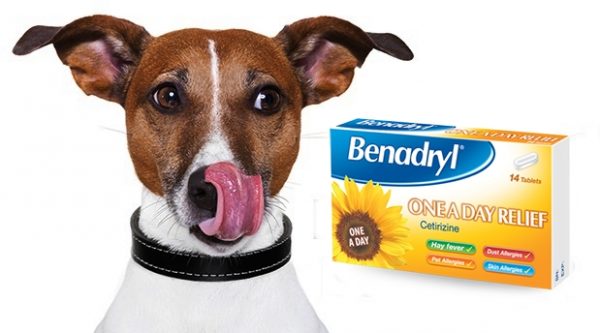
If a vet has previously approved diphenhydramine for the dog, it may help reduce mild swelling and itch.
Think of it as comfort support while getting to the vet, not a fix. It’s not a treatment for anaphylaxis. Use plain diphenhydramine only, and always confirm with a vet before giving any medication.
Sample Reference Guide: Not a Prescription. Confirm Dose With Your Vet.
Never use Benadryl-D. It contains pseudoephedrine, which is toxic to dogs. Check the label and confirm diphenhydramine is the only active ingredient. If the dog has heart disease, glaucoma, high blood pressure, or takes other medications, call the vet before giving anything.
Step 4: Baking Soda Paste (Optional)
Mix equal parts baking soda and water into a thick paste. Apply to the sting site for 15 to 20 minutes, then wipe off with a damp cloth. The cooling effect can help with itch and irritation at the surface.
Meat tenderizer, a traditional recommendation, has been largely set aside by current veterinary protocols due to limited evidence and potential for skin irritation.
Step 5: Rest and Monitor
Keep the dog calm and quiet for at least 2 to 4 hours. Activity raises heart rate, which can speed venom circulation through the body.
Use a cone if the dog is licking obsessively. Repeated licking delays healing and raises the risk of secondary infection.
Check in every 20 to 30 minutes during that first window. Watch for any of the emergency signs listed above. If they appear, do not wait.
Recovery Timeline
Recovery timelines vary by dog, sting severity, and location. The information below covers typical progression, but some dogs move faster or slower.
The most important thing to watch is the progression of the sting. A normal reaction should peak and then start to settle. If you see the swelling continuing to spread or if the dog starts developing new problems, the sting is progressing the wrong way. That’s your signal to stop waiting and get to a vet.
Treatment
If any emergency signs are present, do not attempt home treatment. See the full Emergency Signs list above.
Schedule a Same-Day Vet Visit If:
- Swelling is not improving after 4 to 6 hours
- The dog seems unusually lethargic or refuses to eat or drink
- Pain seems excessive despite first aid
- The stinger could not be removed
- The dog has a history of allergies or previous severe reactions
Follow Up Within a Few Days If:
- Swelling is mostly gone but the site looks infected: pus, spreading redness, or foul odor
- The dog is still limping after 2 to 3 days
What the Vet Will Do:
For anaphylaxis, treatment is immediate: epinephrine is the first priority, followed by IV fluids, oxygen, and other supportive medications such as antihistamines or corticosteroids as needed. In severe cases, intubation may be required to protect the airway. Most dogs need several hours of monitoring before they are stable.
For multiple stings without full anaphylaxis, the concern shifts to kidney function. Bee venom in large quantities can damage the kidneys. Bloodwork, IV fluids, and an overnight stay are common in these cases.
For dogs sent home after treatment: prescription antihistamines, pain management if needed, and instructions for home monitoring. If the dog had a severe reaction, the vet will also discuss emergency preparedness options going forward.
High-Risk Dogs & Vulnerabilities
Dogs at Higher Risk for Stings:
By Behavior:
- Highly curious or playful dogs
- Dogs that chase insects
- Hunting or herding breeds with high prey drive
- Puppies, who are less cautious
By Physical Traits:
- Short-haired breeds with less fur protection
By Environment:
- Dogs living near gardens, orchards, or flowering plants
- Rural or farm dogs
Dogs at Higher Risk for Severe Reactions:
- Dogs with previous bee sting allergies
- Dogs with atopy or environmental allergies, which may indicate a more reactive immune system
- Smaller dogs, where the venom-to-body-weight ratio is higher
- Brachycephalic breeds (Bulldogs, Pugs, Boston Terriers, French Bulldogs, Shih Tzus): compromised airways make even minor swelling dangerous; treat any facial or oral sting as an emergency
- Dogs with heart conditions
If a dog has already had a severe reaction, the risk is higher going forward.
Bring it up at the next vet visit. Allergy testing, immunotherapy, and whether to keep an EpiPen on hand are all worth discussing.
Multiple Stings & Hive Encounters

A dog that stumbles into a hive is in a completely different situation. Cumulative venom can overwhelm even a large, healthy dog. The risk of anaphylaxis, kidney damage, and shock increases sharply with each additional sting.
Remove the dog immediately if a hive is disturbed. Bring the dog indoors, and remove stingers quickly if stung. Speed matters more than perfection.
If diphenhydramine has previously been approved by a vet, it may be given. Do not let the dog return outside near that area. Agitated bees remain defensive for hours.
In areas where Africanized honeybees are present, hive encounters may be significantly more aggressive and should always be treated as emergencies. They attack in larger numbers and pursue threats much farther than standard honeybees.
Prevention
Bees are everywhere dogs want to be. But a few changes to the yard and daily routine can cut the risk significantly.
Garden and Yard Modifications:
Barrier Protection:
- Fence off flower gardens, beehives, and pollinator areas.
- Chicken wire or basic garden fencing works fine.
Plant Selection:
- Plant flowers such as jasmine, which blooms at night when bees are inactive, and zinnias, which attract butterflies more than bees
- Avoid heavy bee attractors such as lavender, sunflowers, clover, and dandelions
Lawn Maintenance:
- Mow regularly to prevent clover and dandelions from flowering
- Remove fallen fruit promptly as it attracts bees
- Fill ground holes where ground-nesting bees might nest
- Keep garbage bins sealed to discourage wasps and hornets
Timing and Supervision:
- Walk dogs in early morning or evening when bees are less active
- Supervise outdoor time during peak bee season in spring and summer
- Avoid gardens right after watering, when bee activity increases
Training and Behavior:
- Work on a “leave it” command for insects
- Redirect attention when a dog fixates on flying insects
- Use positive reinforcement for ignoring bees
Most dogs with high prey drive will chase insects no matter what. The yard is easier to control than the dog.
Frequently Asked Questions (FAQs)
Common Misconceptions
Myth: “Sucking out the venom helps.”
It doesn’t work and can introduce bacteria. Scrape the stinger out and move to treatment.
Myth: “Dogs learn to avoid bees after being stung.”
Most don’t. Prey drive wins. Manage the environment, not just the dog.
1. Can I give my dog aspirin or ibuprofen for pain?
No. Ibuprofen, naproxen, and acetaminophen are all toxic to dogs. Ice and plain diphenhydramine (if previously approved by a vet) are the safe home options. For significant pain, a vet can prescribe an appropriate anti-inflammatory.
2. My dog ate a bee. What do I do?
Treat it as a mouth or throat sting emergency. Do not delay transport to administer medication. Call the vet immediately and monitor closely for any swelling around the throat or change in breathing. Do not induce vomiting as it risks additional trauma to an already irritated throat. Most dogs that eat a bee will be fine, but this warrants immediate vet guidance.
3. How many bee stings are dangerous for dogs?
Multiple stings, any hive disturbance, or any systemic sign such as vomiting, weakness, swelling beyond the sting site, or breathing changes should be treated as urgent. Small dogs reach dangerous thresholds with fewer stings due to body weight. When in doubt, call the vet.
4. Can I use hydrocortisone cream on the sting?
A small amount of 1% hydrocortisone cream on intact skin may help reduce itch and inflammation at the surface. Prevent the dog from licking it off and do not apply near eyes, mouth, or genitals. Baking soda paste is often equally effective and simpler for bee stings specifically.
5. Are puppies more vulnerable than adult dogs?
Yes. Smaller body weight means venom hits harder, and their immune systems are still developing. For puppies, the threshold for contacting a vet should be lower than for adult dogs, even if the sting appears mild.
6. Is it safe to give Benadryl preventatively before hiking in bee-heavy areas?
Not recommended as standard practice. It causes drowsiness, doesn’t prevent stings, and can create a false sense of security that delays recognizing a real reaction. For dogs with known severe allergies, an individualized plan from the vet is the better approach.
7. What if the stinger can’t be found?
That’s common and okay. Bees leave their stinger behind when they sting and die shortly after; wasps don’t, so there may simply be nothing to find. Stingers can also fall out or get buried in fur. Proceed with treatment regardless.
8. Should I be worried about infection after a bee sting?
Infection is uncommon but possible, especially if the dog licks the area repeatedly. Watch for increasing redness, pus, warmth, or foul odor over the 3 to 5 days following the sting. A vet can prescribe a short course of antibiotics if needed.
9. Should I ask my vet about an EpiPen for my dog?
If a dog has had a full anaphylactic reaction before, ask the vet about keeping an EpiPen on hand. It’s not something every dog needs, but for dogs with a known history and owners who live far from emergency care, it’s a conversation worth having.
Note from the Editors: This guide was originally authored by Dr. Winnie, DVM. It was updated to reflect current veterinary safety standards. To ensure the highest clinical standards, this post is currently in our queue for a veterinary re-review.
References
- American College of Veterinary Emergency and Critical Care (ACVECC): Clinical guidelines for Hymenoptera envenomation
- Merck Veterinary Manual: Wasp, Bee, and Ant Stings to Animals
- Hansen, S.R.: “Management of Hymenoptera Sting Hypersensitivity in the Canine Patient.” Journal of Veterinary Emergency and Critical Care, 16(S1)
- PubMed: Hymenoptera stings
- American Kennel Club: What to Do if Your Dog Is Stung by a Bee or Wasp
- Veterinary Emergency and Critical Care Society (VECCS): Anaphylaxis in Small Animals.
- Cornell University College of Veterinary Medicine: First Aid for Insect Stings
- UC Davis School of Veterinary Medicine: Bee and Wasp Stings in Pets
- Pet Poison Helpline: Bee and Wasp Sting Toxicity in Pets
- American Veterinary Medical Association (AVMA): First Aid Tips for Pet Owners
- Veterinary Partner (VIN): Bee Stings and Insect Bites: First Aid